A Tight Brief or a Loose One? Choosing the Right Creative Boundary
Choosing a creative boundary helps a project gain focus without closing off useful possibilities. Learn when to set firm limits and when to leave room.
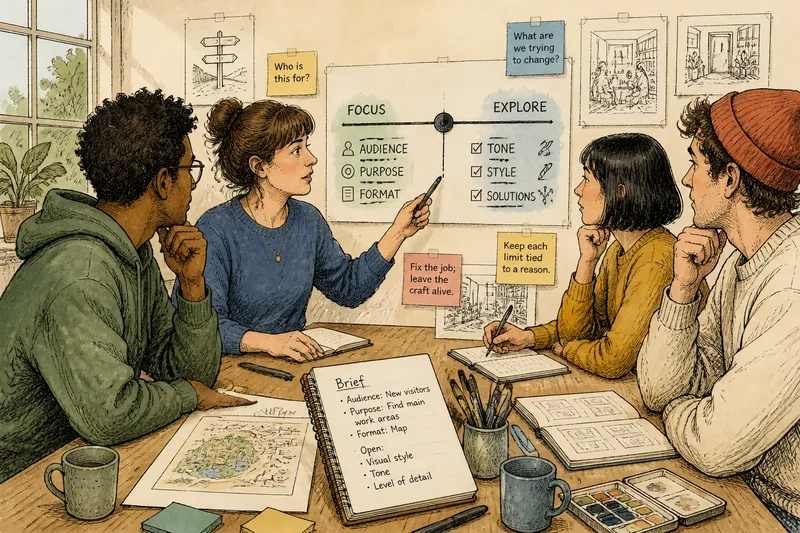
When a creative project keeps spreading in every direction, the brief may be too loose; when every choice feels pre-decided, it may be too tight. Choosing a creative boundary is less about picking a favourite style of brief than noticing what the work needs next: focus, or room to explore.
What should a boundary do?
A constraint draws a line around some part of the work. It might set the audience, format, materials, mood, or time available. A boundary is useful when it helps someone make a decision they were otherwise postponing. It becomes restrictive when it settles choices that the work still needs to discover.
Think of a brief as a set of adjustable dials, not a single switch marked “tight” or “loose”. You can be firm about who the work is for and flexible about its tone, or fix the format while leaving the subject open. This makes the brief easier to tune than an all-or-nothing choice.
Keep each limit tied to a reason. “One page” may make sense for a noticeboard; “one page because shorter feels more creative” may not.
When does a tight brief help?
A tighter boundary is useful when the work has a clear job but too many plausible ways to do it. A community garden needs a sign explaining where visitors should leave tools. If the writer is considering jokes, illustrations, seasonal slogans and detailed rules, the brief can narrow the task to a friendly instruction for first-time visitors, readable at a glance.
The aim is not to dictate every sentence. It is to remove decisions that distract from the central one. A firm audience and purpose can leave plenty of expressive freedom in wording, colour and layout.
Tight briefs can also help a group work together. Agreeing on a shared format or a single intended reader gives people a common point of reference. Without that, a disagreement about a draft may really be a disagreement about what the draft is supposed to do.
- Use a firm boundary when the audience or purpose is already known.
- Set a format when it is part of the work’s real setting.
- Leave choices open if they shape the voice or meaning.
Fix the job; leave the craft alive.
When is a loose brief more useful?
A loose boundary suits work whose direction is not yet clear. If a group is exploring ways to make a local library feel welcoming to teenagers, deciding at once on a poster, a reading list or a social event could shut down useful possibilities. A broad question gives the group space to notice what it actually wants to change.
Loose does not have to mean vague. It can still name the audience, the setting and the question, while leaving the answer undecided. “What might help a teenager feel comfortable spending time here?” offers a more workable starting point than “Think of something good for the library”.
A loose brief works best when there is some way to keep ideas connected to the purpose. You might record each suggestion beside the need it addresses. That allows playful possibilities without letting the conversation drift into unrelated improvements.
How can you tell the boundary needs adjusting?
Pay attention to the kind of difficulty the work is producing. If people keep asking what the project is for, the brief may need a clearer purpose or audience. If they can explain the purpose but keep offering near-identical solutions, loosen one of the choices that has already been fixed.
Say you are planning a small illustrated map for visitors to a shared studio. Imagine the first draft is packed with every room, tool and house rule, and no one can tell where to look first. Keeping the map format but narrowing its audience to newcomers who need to find the main work areas should make the next draft easier to organise; if the map still feels generic, you could loosen the visual style rather than expand its scope.
That is a useful distinction: change the boundary that is causing the difficulty, not every boundary at once. Otherwise, it becomes hard to tell what helped.
- Repeated questions about purpose suggest adding focus.
- Many similar ideas suggest loosening one choice.
- Unrelated suggestions suggest restating the central question.
- A lively idea that cannot serve the intended reader may need a different home.
Which creative boundary should you choose?
Should I fix the audience or the format first?
Fix the audience first if the work’s meaning depends on who will use it. Fix the format first when the setting demands it, such as a notice that must fit a small display.
Can a brief be both tight and loose?
Yes. A brief can set a clear purpose and audience while leaving materials, style or specific solutions open. That combination gives the work a direction without writing its answer in advance.
What if the group disagrees about how much freedom to allow?
Ask which choice the disagreement is really about: the reader, the purpose, the format or the way the idea is expressed. Make only the necessary decision firm, and keep the others available for exploration.
When should I revise the brief?
Revise it when the work’s difficulty points to a particular boundary rather than simply to the effort of making something. State what is changing and why, so the next draft can respond to that change.
How do you keep a brief flexible without making it slippery?
Write down what is settled and what remains open. Keep the list short enough to consult while working. For example, a brief might settle the audience and purpose, while leaving the format and tone open until the first ideas reveal what fits.
It can help to treat a boundary as temporary rather than sacred. A choice made early is a working decision, not proof that every later idea must obey it. If a promising direction challenges the brief, ask whether the direction better serves the purpose, or merely feels exciting because it is new.
Keep the original brief nearby when changing it. The contrast makes it easier to see whether the project is gaining clarity or simply accumulating possibilities.
What makes a boundary worth keeping?
A useful boundary gives the next decision somewhere to land. It might help a writer choose one reader, help a designer select a format, or help a group stop adding features that do not serve the work. The right amount of firmness can change as the project moves from exploration towards a finished idea.
When choosing a creative boundary, ask what the work needs at this stage, then tighten or loosen only the part of the brief that answers that need. A small, deliberate adjustment is often enough to restore either direction or possibility.